Light Harvest in Argentina Accompanied by Rising Production Costs
Olive oil production in Argentina is expected to be less than one-third of last year’s record yield. At the same time, electricity and fuel prices have risen dramatically.
After a record harvest that beat expectations in 2023, olive oil production in Argentina fell substantially in 2024.
The world’s largest olive oil-producing country outside the Mediterranean basin produced 40,000 metric tons of olive oil in 2023, capping off three consecutive years of bumper harvests.
While official data have not yet been published, Julián Clusellas, president of La Rioja-based Valle de la Puerta and an Argentina Olive Federation board member, estimated that the 2024 harvest would be 30 percent of the 2023 harvest – about 12,000 tons.
See Also: 2024 Harvest Updates“Production was lower compared to 2023,” confirmed Guillermo Kemp, the commercial director of San Juan-based Solfrut and fellow AOF board member. “We do not have official data from all provinces yet, but that number could be a good approximation.”
“At Solfrut, we had a year of lower production than last year, which aligns with what happened throughout the country,” he added. “We are working hard on our farms to have significant production levels by 2025.”
Clusellas said this year’s harvest decline was expected after the record-high yield, with many of the country’s olive groves entering an ‘off-year’ in the olive tree’s natural alternate bearing cycle.
On and off years
Olive trees have a natural cycle of alternating high and low production years, known as “on-years” and “off-years,” respectively. During an on-year, the olive trees bear a greater quantity of fruit, resulting in increased olive oil production. Conversely, an “off-year” is characterized by a reduced yield of olives due to the stress from the previous “on year.” Olive oil producers often monitor these cycles to anticipate and plan for variations in production.
Frankie Gobbee, the co-founder and chief executive of La Rioja-based Argentina Olive Group, Argentina’s largest producer, told A ambos lados de la mesa, a podcast, that oil yields were noticeably lower this year.
“On average, it’s about 16 or 17 percent here,” he said. “This year, when we started to harvest, it did not reach above ten or 11 percent. There were low oil yields across the country.”
Meanwhile, Sierra Pura president Veronica Ortega confirmed a production decline in the central Argentine province of Córdoba but emphasized that quality remained high.
“The 2024 harvest was very positive in terms of fruit quality, although with moderate productivity,” she said. “This year, we faced low humidity due to the lack of rain, which made irrigation management a challenge, especially since we depend on the natural slopes of the mountains.”
Still, olive oil production in Argentina is on an upward trend as producers replace medium- and high-density groves with Arbequina, Arbosana, Koroneiki and Hojiblanca super-high-density groves. Others are planting new olive trees at varying scales.
While olive oil yields fell for many producers, input costs increased dramatically. After his December 2023 election, President Javier Milei took action to reduce government spending to lower inflation.
One of his first decisions was to remove subsidies on electricity and fuel, which has profoundly impacted the country’s many irrigation-dependent growers. “The cost of electricity went from $300 (€270) per hectare to an average of $800 to $900 (€715 to €805) per hectare,” Clusellas said.
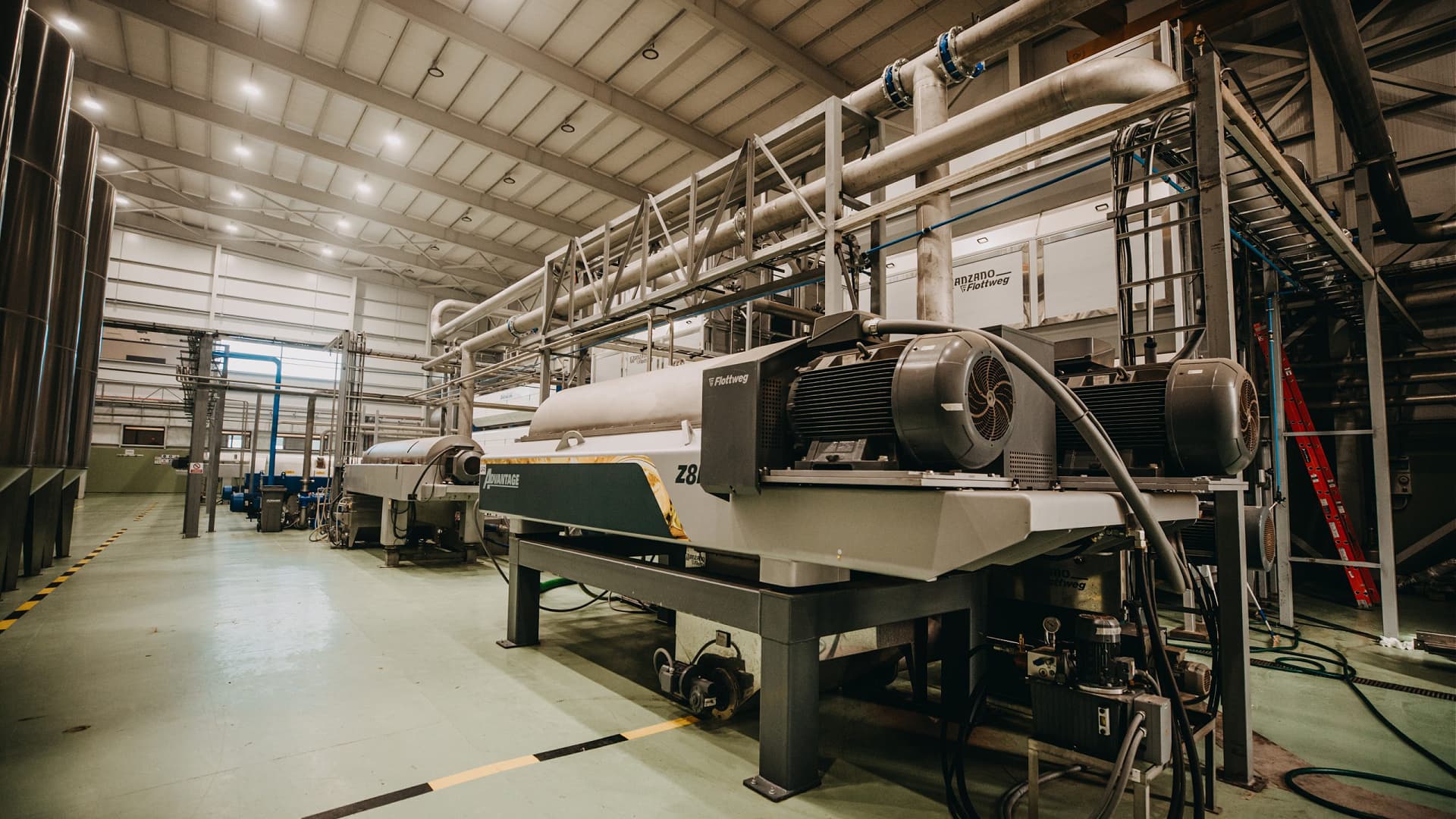
Mlling costs have increased in 2024 after the governemnt of President Javier Milei removed subsidies on electricity and fuel. (Photo: Solfrut)
Higher electricity prices have also increased the cost of running the olive mills, the largest of which operate 24 hours per day during the harvest.
To address the concern of higher electricity costs, Valle de la Puerta plans to build a two-megawatt solar park to power its entire farming and milling operation.
The Milei government’s cost-cutting measures also included removing hundreds of price controls, dramatically increasing the cost of nearly all consumer goods.
As a result, consumption is now limited to the upper-middle and upper classes, with extra virgin olive oil prices reaching €8 or €9 on supermarket shelves.
“There is no significant consumption,” Clusellas said. “It is not a product that forms part of the daily basket of the Argentine.”
Gobbee estimates that per capita consumption in Argentina is between 200 and 300 grams.
Due to low domestic consumption, Argentina exports most of its olive oil, about 90 percent of which is extra virgin, to Brazil, Europe and the United States.
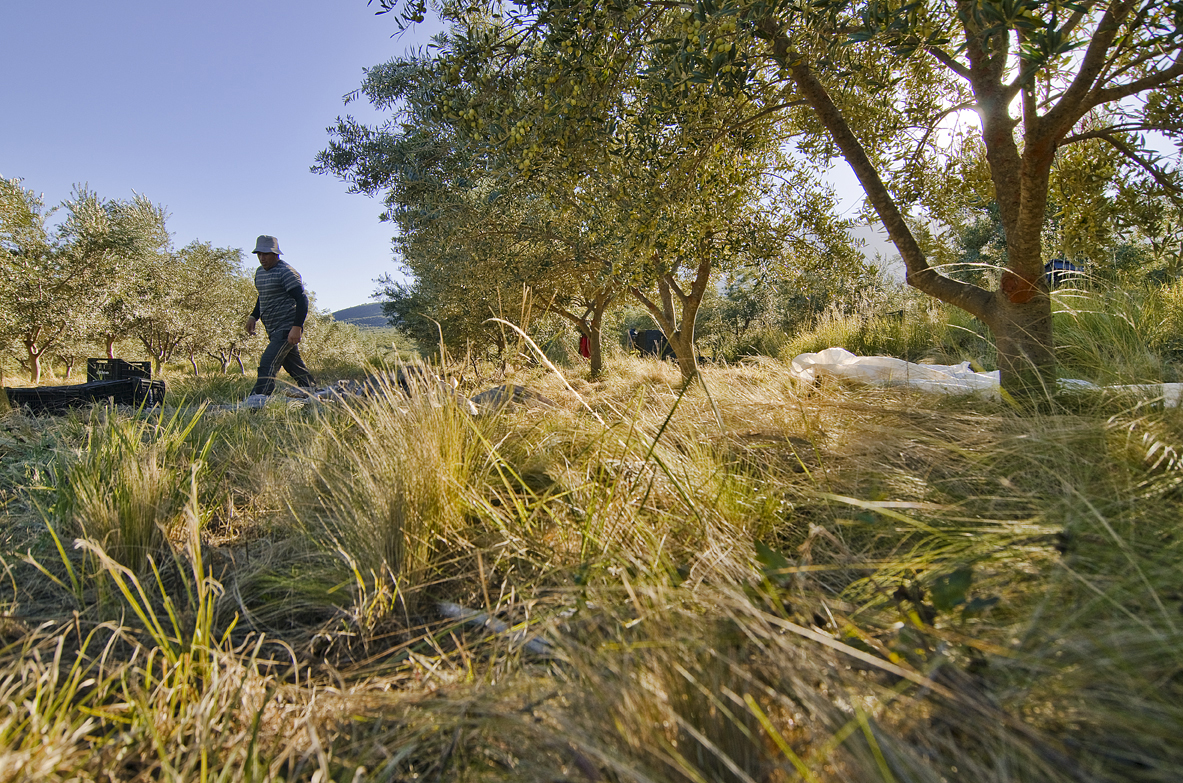
The 2024 harvest in central Argenina’s Traslasierra Valley was impacted by the lack of rain. (Photo: Sierra Pura)
Since consecutive years of poor harvests in the Mediterranean resulted in historically high olive oil prices, Argentine producers have enjoyed elevated revenues and managed to cope with higher production costs for now.
“The fact that prices have remained at last year’s levels and remain high today undoubtedly represents an opportunity for Argentine producers,” Kemp said.
“We have taken advantage of the prices from the previous two years, and we are continuing to take advantage of them because the price is still very high,” Clusellas added. “But as soon as the prices return to normal, expected for next year, things will get complicated.”
While he anticipates the short and medium term to be immensely challenging for olive oil producers throughout Argentina, Clusellas believes other reforms will help producers in the long run.
He cited labor reforms that will give producers more flexibility to hire temporary workers for the harvest and the liberalization of import restrictions as two measures that will lower costs over time.
Ortega added that the Milei government’s efforts to remove currency controls and lower inflation, which peaked at 211 percent in 2023, would improve the economic outlook for olive growers.
“The gradual opening to the import of critical inputs for our production, together with the reduction in inflation and the drop in the value of the U.S. dollar, has generated greater stability and allows us to better plan production, which benefits our sector,” she said.
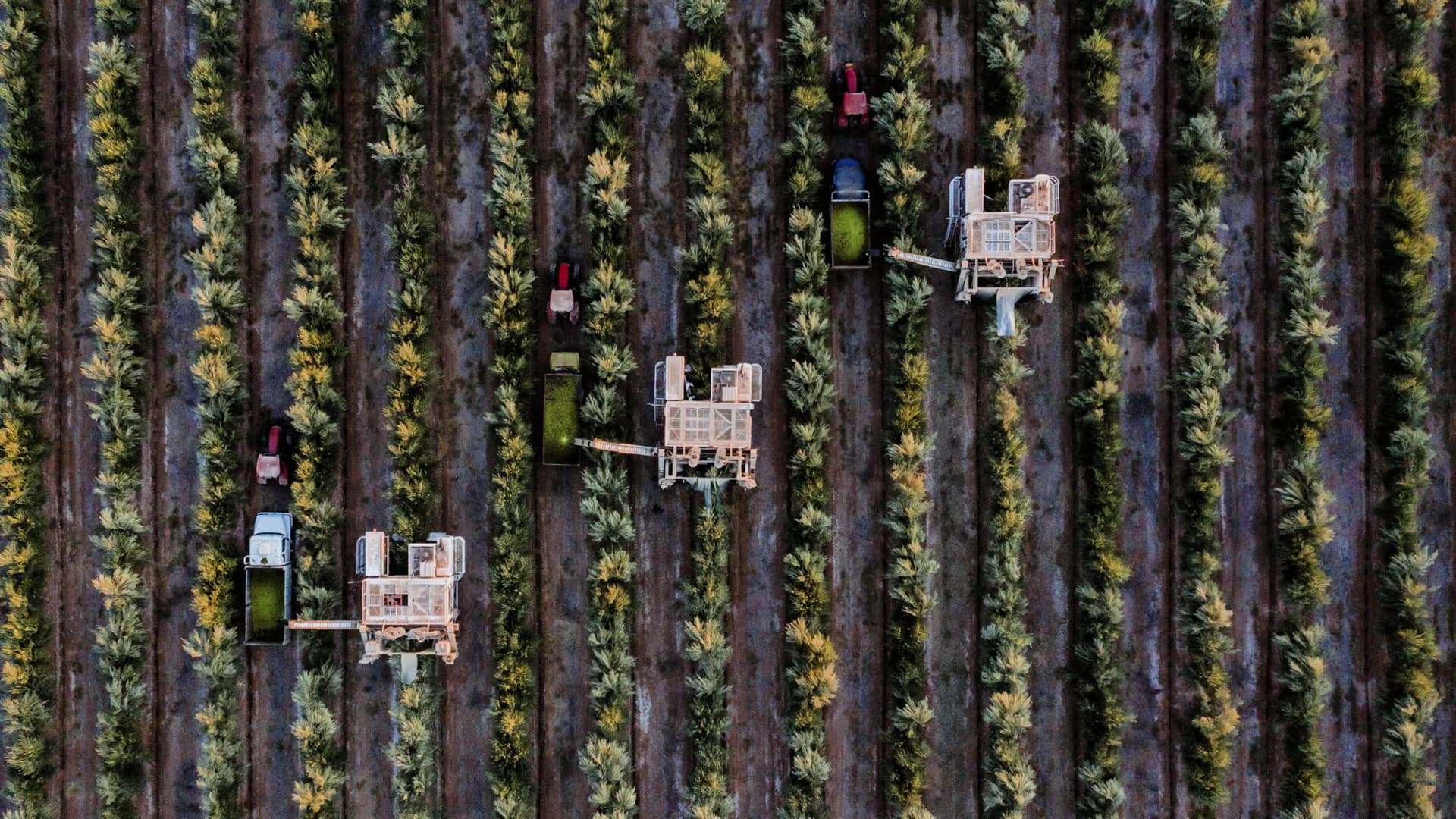
Olive oil production in Argentina is expected to increase as new high-density groves are planted. (Photo: Solfrut)
Looking ahead to 2025, producers have mixed expectations. Some anticipate that production will rebound but fall short of 2023’s record yield.
According to Gobbee, frigid temperatures and frosts in the winter (June to August in the Southern Hemisphere) and early spring may negatively impact some groves while replenishing water sources.
“We will have to wait and see what impact this has on the following harvest,” he said. “It is also important to remember that this [winter weather] has also brought water, and we are hoping for another good harvest in 2025.”
Clusellas said the first real indication of the next harvest comes at the end of September when the trees begin blossoming. However, he believes the cold weather and frost have damaged some groves.
“It will not be a very good harvest next year because the spring was very cold, and there were very strong frosts,” he said. “We expect a harvest that could be described as 80 percent of a very good harvest.”