Goya Spain GM Says the Global Olive Oil Sector Potential Lies with Young Consumers
Antonio Carrasco believes olive oil brands must define themselves through quality while communicating these values to young people.
Since the company was founded by Spanish immigrants in New York City nearly nine decades ago, Goya Foods has specialized in international olive oil commerce.
Founder Prudencio Unanue moved from Burgos, in the autonomous community of Castile and León, to the United States in 1921 and founded a grocery store that sold Spanish products to the American market in 1936.
We have to develop the product among young people, who are the ones who will demand this type of product in the future; a product that is healthy and sustainable.
“It started with olive oil, olives and preserves,” Antonio Carrasco, the general manager of Goya en España, told Olive Oil Times. “At first, he imported the olive oil from local producers and packers. Later he set up his own bottling line in Brooklyn and imported the olive oil in bulk from Spain.”
Now, the company exports extra virgin olive oil produced exclusively in Andalusia and bottled in Seville to 20 different countries. However, Goya continues to focus on the United States, the world’s largest olive oil importer.
See Also: Quality and Investment Are Key to Olive Oil’s Future, Boundary Bend Co-Founder SaysWhile he highlighted the many challenges facing the growth of the global olive oil trade, Carrasco said there is plenty of market share available to olive oil producers, but their focus must be on flavor, health and quality over price.
“The growth potential of the olive oil market worldwide is great,” he said. “Currently, olive oil makes up less than two percent of the total vegetable fat consumption. In other words, we have significant growth potential.”
Carrasco said olive oil is a unique product that must be positioned between the worlds of wine and vegetable oils.

Antonio Carrasco with a statue of founder Antonio Unanue, founder of Goya en España.
Like wine, olive oil’s market share growth depends on consumers valuing the product for its organoleptic qualities.
However, Carrasco points out that consumers drink wine alone and, based on the price, bottle and label design and flavor, decide whether or not they like the brand.
Conversely, consumers are less likely to try olive oil by itself. Instead, olive oil is mixed with other ingredients and heated or consumed raw amongst the medley.
This is where olive oil interlopes with the world of oilseeds and vegetable oils. Still, it stands out, boasting a healthier profile in terms of fat content and phenolic compounds, but its price remains closer to that of wine than rapeseed or sunflower oil.
“Price is an element that always goes against olive oil,” Carrasco said. “It is always the most expensive fat. There is also a lack of habit in many countries. That is to say, in Mediterranean-producing countries, olive oil is a staple product. It is not considered a gourmet or a specialty product like it is in the rest of the world. Still, this is changing little by little.”
Carrasco views young people across North America, Latin America and Asia as the key demographic to change the previous olive oil consumption paradigm.
“Young people are learning more about the health benefits of a healthy diet, a Mediterranean diet,” he said. “We have to develop the product among young people, who are the ones who will demand this type of product in the future; a product that is healthy that is sustainable.”
As a result, Carrasco said Goya Foods works with chefs and influencers and other forms of social media marketing to meet young people where they are and make a case for olive oil.
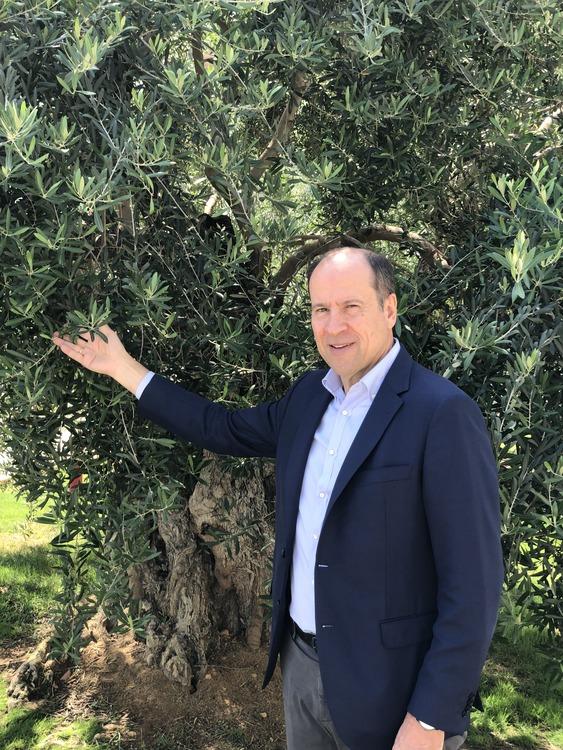
Carrasco believes olive oil producers must focus on young consumers, reaching them through social media.
Carrasco said the olive oil culture of China remains an impediment to the expansion of the brand there. While the appetite for olive oil has grown in China in recent years, Carrasco said Chinese consumers still see olive oil as a specialty food and novel gift, not a kitchen staple.
“We have not had that success in China because it is a market in which olive oil is considered a gift,” he said, noting that 80 percent of olive oil sales in the world’s second-largest economy are for gifts in Goya’s experience.
“So you have to have a distribution to reach that gift market,” Carrasco added. “But, growth is very difficult and very slow from the point of view of consumption and health. It is a growth in gifts at a certain time, such as the Chinese New Year.”
Carrasco said companies must have excellent supply chains and relationships in China to exploit these moments in the market. If companies miss the key holiday season, sales will be slower.
Apart from the United States, which he emphasized remains the company’s priority market, Carrasco said Goya Foods focuses on Japan, where there is an emerging olive oil culture, South Korea, Canada, Mexico and northern European countries.
Due to its deep roots in the country, especially among the United States’ vast Hispanic community, Goya Foods will always focus on the U.S., even as it has become an increasingly risky market for Spanish olive oil producers.
Unlike others, Carrasco said that Goya Foods refused to change its business model when a 25-percent tariff was imposed on packaged Spanish olive oil imports to the U.S. due to a trade feud between the U.S. and Europe surrounding subsidies for airplane manufacturers.
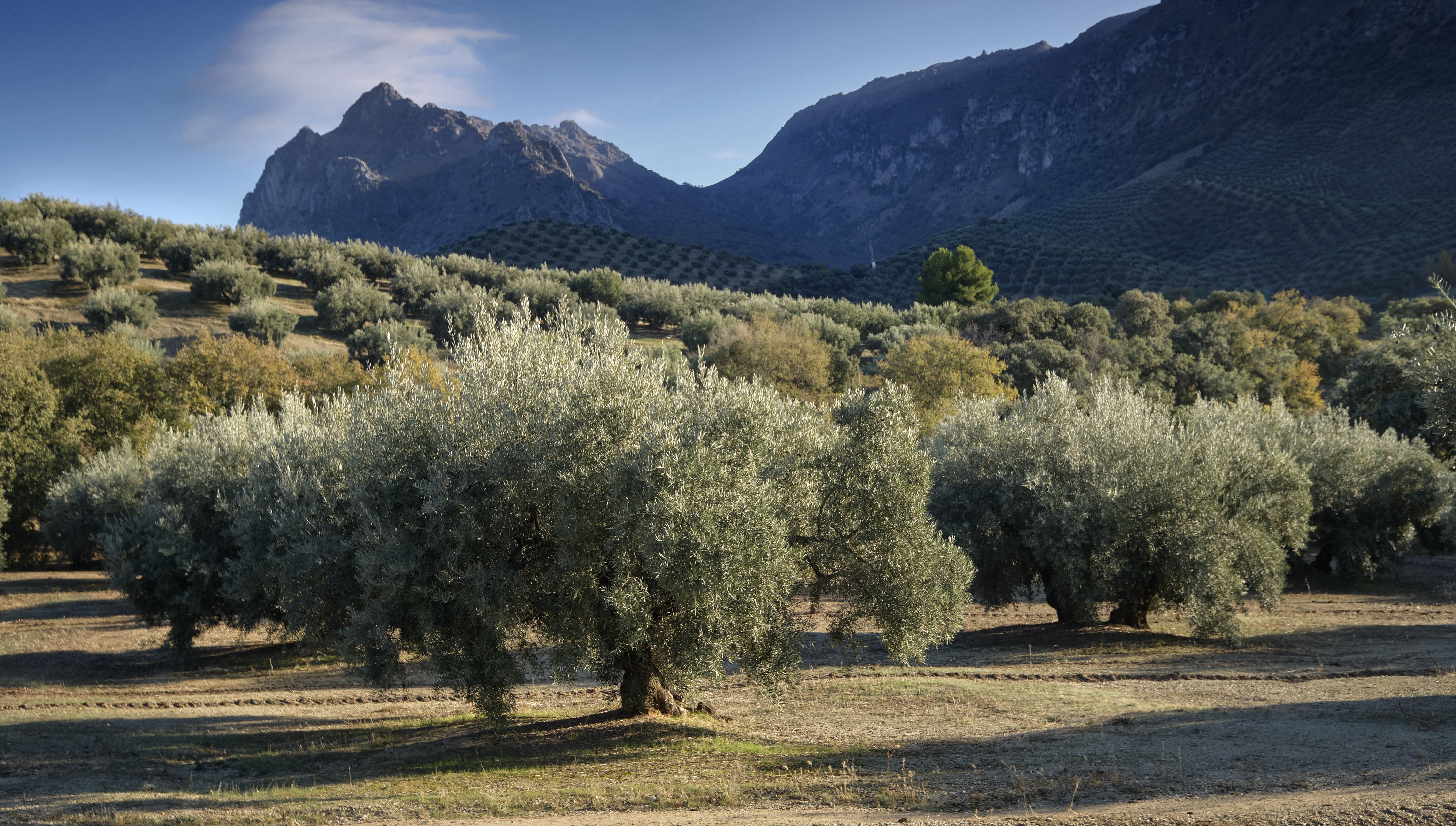
Carrasco said that Goya stakes its reputation on the quality of Andalusian olive oil and does not buy olives from anywhere else.
“When we had 25 percent tariffs due to the United States imposing those tariffs, we, like every other brand, had a choice,” Carrasco said. “Goya had the option of buying the oil in Portugal, Morocco or Turkey and rebottling in the United States. All these options were given to us to avoid the tariff.”
“But we decided to maintain our Spanish origin despite the 25 percent tariff, and during those six to eight months that the tariff lasted, it was a competitive disadvantage,” he added.
Unlike some of its peers in Spain, who source olives and olive oil from across the Mediterranean, Goya Foods also faces a competitive disadvantage after poor harvests, such as the one Spain just experienced.
“We do not have the ability to buy olives and olive oil from other countries,” Carrasco said. “This season, we are at a disadvantage because of this position.”
“But we have to take care of our brand and Spanish origin,” he added. “We have based our brand development and marketing on quality and our Spanish origin.”
While Spain’s lowest harvest of the past decade may have disrupted the company’s ability to produce as much olive oil as normal, Carrasco believes that quality is more important, especially in the United States.
As a result, he believes that companies must teach consumers, journalists and influencers how to taste olive oil and understand the organoleptic differences between extra virgin and virgin olive oils rather than solely relying on physiochemical metrics.
Carrasco added the common belief that extra virgin olive oil produced in the United States, specifically California, is inherently superior to extra virgin olive oil produced in the rest of the world is counterproductive.
“Californians are doing their job defending the California lobby,” he said. “It is very strong, and, well, they are campaigning against imported oils.”
“But really, it is not to say that California oil is not good and imported oil is bad,” Carrasco added. “There are Californian oils that are very bad, and there are imported oils that are very bad, but there also are imported oils that are good.”
Carrasco said efforts to create this zero-sum world do a disservice to American consumers, and he pointed out that California will never produce enough olive oil to meet domestic demand, so classifying all imported olive oil as low quality and possibly fraudulent turns off potential customers to any olive oil rather than growing the consumer base.
“I believe that in the end, what we have to give the consumers is brand security,” he said, citing the role of awards – such as the three Gold Awards won by Goya at the 2023 NYIOOC World Olive Oil Competition – in this process.
“In other words, like with any other product, the consumer has to trust the brand, and the brand has to give confidence to the consumer that they are buying a quality product,” Carrasco concluded. “That is what we are trying to do at Goya.”