



At Fontanaro Estate, Quality is Everything
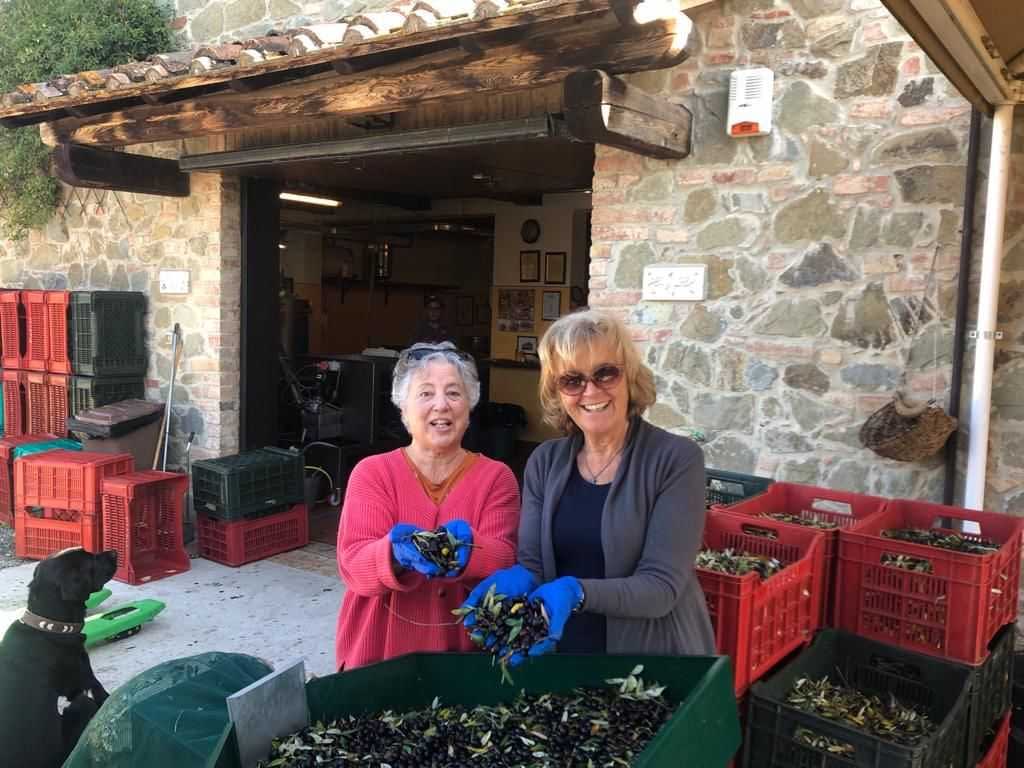

The Fontanaro Estate in Umbria, Italy, is a family-run olive oil producer with a deep connection to the land and a commitment to high-quality, sustainable production. The estate, named after the Roman god of beginnings, produces award-winning olive oil from a variety of organically grown trees and aims to educate consumers about the qualities of high-quality extra virgin olive oil. Their long-term goal is to set up a cooperative with other olive mills in the area to produce energy, reflecting their commitment to sustainability and the future generation.
The Fontanaro Estate is nestled in the hills surrounding the beautiful village of Paciano.
Named after the Latin words for Peace of Janus – Pax Jani – the estate is located near the remains of a Roman temple dedicated to the god of beginnings and doorways. This inspired the name of their extra virgin olive oil, the label of which reads “Fonte della Pace” or “Source of Peace.”
We must always build keeping an eye on the past, which is important for its traditions and wisdom, while always looking toward the future and the next generation.
“When my husband Sandro and I got married in the summer of 1972, my present to him was a plot with 100 olive trees,” Lucia Verdacchi told Olive Oil Times. “He immediately loved the place as I do, and this is where our story as producers started.”
The small grove that sealed their pact of love is still part of the property, located in the province of Perugia, in Umbria, where Verdacchi’s family has produced olive oil for generations.
See Also:Producer Profiles“My grandfather was a veterinarian who loved animals and plants,” she said. “He passed on his passion for the olive trees to me. I was born and lived elsewhere, working in communication, but at a certain point, I felt the natural and necessary desire to return here.”
On this land, the couple has renovated an old farmhouse and established new milling facilities.
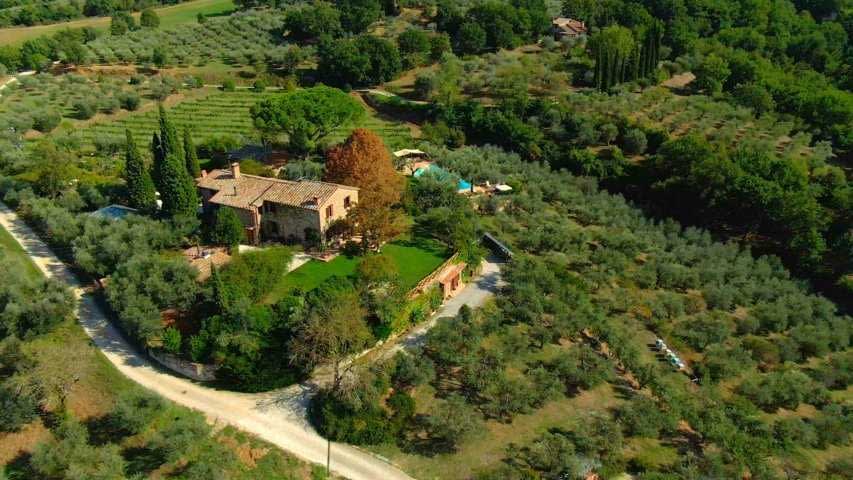
Photo: Lucia Verdacchi
“Our main goal was to expand the olive growing land,” Verdacchi said. “I have fond memories of when we were placing the young trees in the ground and our two kids amused themselves by hiding in those deep planting holes.”
Today, Giovanni and Alina Pinelli, along with their mother, maintain almost 4,000 trees located on gentle slopes overlooking Lake Trasimeno.
Frantoio, Leccino, Moraiolo, Pendolino and the autochthonous Dolce Agogia are organically grown and blended to create a medium fruity extra virgin olive oil with aromas of wild chicory, green tea and artichoke. These sensorial characteristics have earned the oil awards at the NYIOOC World Olive Oil Competition.
Along with producing award-winning olive oils, the family also runs a couple of dedicated agritourism properties, both of which are named after olive varieties.
“The invitation to taste our oil is extended to all our guests,” Verdacchi said. “We involve them in our great love for olive growing and olive oil, and they leave full of enthusiasm about this product.”
According to Giovanni Pinelli, part of cultivating this enthusiasm and appreciation for high-quality extra virgin olive oil comes from educating consumers.
“During the tasting sessions with our guests, we also make a comparison between our product and a low-quality one,” he told Olive Oil Times. “We want them to become aware of what a high-quality extra virgin olive oil is.”
He emphasized that the work behind running a successful tourism business while still producing high-quality oils is challenging and done following the highest standards.
See Also:Best Olive Oils From Italy“Our olive trees are healthy and beautiful thanks to our low environmental impact management that respects the territory,” Pinelli said. “Our mill is dedicated exclusively to our fruits, despite having a much greater capability, because we want to manage the whole production cycle with the utmost care.”
“We plan to expand our production volumes by acquiring more olive groves while always maintaining the highest level of quality,” he added.
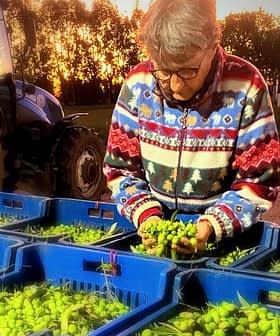
The olives are collected and crushed in a short period in the modern mill. The oil is then filtered and stored under nitrogen in a temperature-controlled room.
“The state-of-the-art technology is continuously updated,” Pinelli said.
Beautifully inserted in the landscape, the mill has a structure designed to harmonize with the territory. It was constructed 10 years ago and the machinery has been completely updated over the last two years.
“It is painstaking and tireless work,” Pinelli said. “Yet we do it with enthusiasm, also with the help of great collaborators who share our vision and objectives.”
Love and enthusiasm are fundamental emotions for any producer to have, Verdacchi added.
“I think that it is impossible to do a great job without these,” she said. “We are not just a commercial company. Our goal is to develop a vision which includes the respect for the environment, the promotion of a sustainable lifestyle and the importance of harmony and beauty in people’s lives.”
“Everything we do includes and expresses all of this,” she added.
The far-reaching approach underlying the entrepreneurial vision at Fontanaro Estate is a key factor behind their success as producers. It is also the result of a combination of their natural predispositions and acquired experiences.
“We have always aimed at self-sufficiency,” Verdacchi said, explaining that they have implemented a total recycling system, from rainwater to the residues of milling, which are returned to the earth.
“At the beginning, it seemed important to us to use resources efficiently and responsibly,” she said. “Nowadays, the circular economy is a model promoted globally as a solution for a sustainable future.”
The Umbrian farmer revealed that their long-term goal is to set up a cooperative with the olive mills of the area to produce energy.
“We just have a draft project,” Verdacchi said. “Even if it takes years, I believe it is important to have a purpose, a vision. We have several projects under construction.”
“I think that we must always build keeping an eye on the past, which is important for its traditions and wisdom, while always looking toward the future and the next generation,” she concluded. “In this sense, it is essential to protect the biodiversity and respect the territory in a truly sustainable way. This also translates into creating beauty and harmony, as well as aiming not at quantity but at quality.”
Related Articles
Feb. 11, 2025
Policy Makers, Advocacy Groups Discuss Future of European Food
Members of the European Board on Agriculture and Food, including Slow Food, said policy must change to support the broader uptake of healthy and sustainable diets.
Jul. 25, 2025
Europe Is Moving Away from Its Green Agenda
A year after elections which saw rightwing forces increase their power in Parliament, the E.U.’s much-vaunted Green Deal is fading.
Nov. 17, 2025
Canadian Company Brings New Recognition to Cretan Olive Oils
Panagiotis Tsiriotakis returned to his roots, founding Acropolis Organics and bringing global recognition to his Cretan extra virgin olive oils.
Mar. 18, 2025
Short-Term Pre-Milling Refrigeration Found to Retain Olive Quality
Researchers in China identified 4 ºC as the optimal temperature for short-term storage of olives, particularly for periods exceeding 24 hours after harvesting.
Aug. 21, 2025
Mild Temperatures Worry Olive Growers in Central and Northern Italy
Cool, wet weather has led to increased olive fruit fly activity. Authorities recommend preventative measures and treatments in infected groves.
Jul. 1, 2025
Apulian Producer Extols Nuances of a Native Variety
Blending early-harvested native Coratina and Ogliarola Garganica olives yielded a Silver Award at the 2025 NYIOOC for Oleificio Fratelli Vieste.
Feb. 12, 2025
Meet the Genoese Couple Cultivating Traditional Italian Olives in Uruguay
After careers in foreign service, the founders of Pique Roto are introducing Uruguayan consumers to traditional Italian olive varieties.
Oct. 28, 2025
Quality Push Redefines Olive Oil Production in Montenegro
Modern equipment, renewed collaboration, and respect for ancient groves are redefining olive oil production in Montenegro,.