



Global Temperatures Expected to Rise 2ºC by 2030


A new report from the World Meteorological Organization predicts global temperatures will rise nearly 2 ºC above pre-industrial levels by the end of the decade, with a high chance of surpassing 1.5 ºC in the next five years. The report warns that every degree of warming will fuel extreme weather events and negative impacts on economies, ecosystems, and daily life.
Global temperatures are forecasted to rise nearly 2ºC above pre-industrial levels by the end of the decade, according to a new World Meteorological Organization report.
The WMO forecasts that annual average global surface temperatures for each year between 2025 and 2029 may rise between 1.2°C and 1.9°C above the average from 1850 to 1900.
The report further anticipated that there is an 80 percent chance that one of the next five years will surpass 2024 as the hottest year on record, and an 86 percent chance that at least one year will exceed 1.5°C above the pre-industrial level.
See Also:Olive Council Tests Plan to Help Olive Farmers Sell Carbon CreditsScientists from Copernicus, the Earth observation unit of the European Union’s space program, confirmed in January that average global surface temperatures reached 1.6ºC above pre-industrial levels in 2024.
Climate scientists have warned that multiple tipping points are likely to be triggered by 1.5°C of warming, including the collapse of ice sheets, changes to ocean currents, biodiversity loss, and the melting of permafrost.
“These very latest predictions suggest we are very close now to having 1.5ºC years commonplace,” said Adam Scaife, the head of long-range forecasting at the Met Office, the United Kingdom’s national weather and climate service.
“We’ve had one in 2024, but they’re increasing in frequency, and we are going to see more of these,” he added. “These are shocking statistics, and there is even a chance now, and it’s the first time we’ve ever seen such an event in our computer predictions, of a 2ºC year, which would be completely unprecedented.”
The WMO warned that every degree of warming fuels heatwaves, torrential rainfall events, intense droughts, the melting of ice and glaciers, ocean heating and rising sea levels.
Heatwaves in the southern Spanish region of Andalusia in May 2022 and 2023 were mostly responsible for back-to-back historically poor harvests in the world’s most prolific olive oil-producing region, contributing to record-high olive oil prices of the previous few years.
The WMO further anticipated that the Arctic, which reached a record-high temperature of 38 ºC in 2020, would warm three and a half times faster than the global average over the next five years, accompanied by significant sea ice melt in adjacent seas.
A separate report published in April by the Copernicus Climate Change Service found that Europe is warming at a faster rate than the global average.
“This report highlights that Europe is the fastest-warming continent and is experiencing serious impacts from extreme weather and climate change,” WMO Secretary-General Celeste Saulo said.
The WMO also forecasted increased summer precipitation in some regions, including the Sahel, northern Europe, Alaska and northern Siberia, along with drier conditions in the Amazon basin.
“We have just experienced the ten warmest years on record,” said Ko Barrett, the WMO deputy secretary-general. “Unfortunately, this WMO report provides no sign of respite over the coming years, and this means that there will be a growing negative impact on our economies, our daily lives, our ecosystems and our planet,”
“Continued climate monitoring and prediction is essential to provide decision-makers with science-based tools and information to help us adapt,” she added.
Related Articles
Sep. 14, 2025
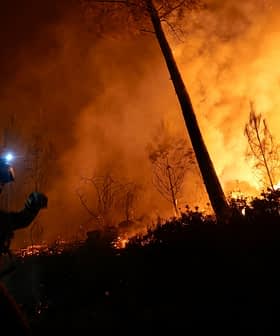
Record-Breaking Wildfires Scorch Europe in 2025
Two-thirds of the wildfire-inflicted damage came in Spain and Portugal, which combined to produce nearly half of the world’s olive oil in the 2024/25 crop year.
Jan. 28, 2025
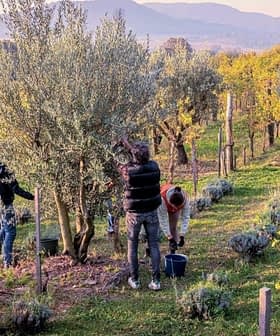
Farmers in Hungary Make Headway in Olive Cultivation
Capitalizing on the country’s warming winter weather and the persistence of farmers, olive trees flourish in Hungary's southern territories around Lake Balaton.

Mar. 21, 2025
Italian Bill Would Support Hobby Growers to Prevent Abandonment
The proposed legislation recognizes the role of hobbyist olive growers in preserving the environment and Italy’s agricultural heritage.
Jul. 17, 2025
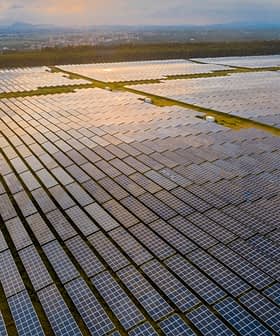
Solar Ban in Italy Pushes Developers Into Olive Oil Production
Italian agri-solar PV projects are thriving despite a ban on utility-scale solar on agricultural land. Companies are finding success in combining renewables with farming.

May. 6, 2025
Olive Council Tests Plan to Help Olive Farmers Sell Carbon Credits
The Carbon Balance project assesses olive groves as natural carbon sinks, generating carbon credits for farmers through sustainable land management.
Dec. 1, 2025
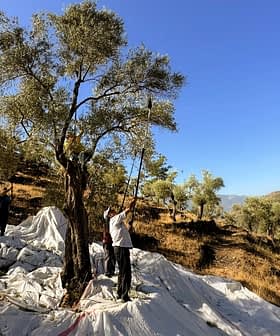
Turkey Braces for Sharp Drop in Olive Oil Output as Weather and Costs Take Toll
Producers across Turkey report one of the most challenging seasons in years, with poor fruit set and severe drought expected to push olive oil output sharply lower.

Apr. 29, 2025
Olive Sector Key to Andalusian Circular Economy Plan
A new five-year plan from the Andalusian government sets ambitious goals for transforming the world's largest olive oil-producing region into a circular bioeconomy.

Jan. 28, 2025
Mill Wastewater Extract Yields Promising Health Benefits
A dietary supplement made with hydroxytyrosol extracted from olive mill wastewater inhibited the production of inflammatory compounds and showed antibacterial properties.